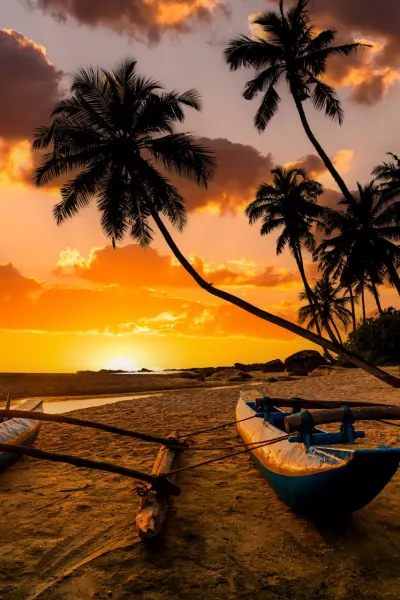
Sri Lanka is one of the few destinations in Asia where the question "when should I go?" has no single answer — and that is actually good news.
Thanks to two distinct monsoon systems operating on opposite sides of the island, Sri Lanka offers excellent weather somewhere every month of the year. The key is knowing which coast and which region to prioritise depending on when you travel.
This guide breaks down Sri Lanka's climate by month, explains the two monsoon seasons, and helps you choose the best time for beaches, wildlife safaris, hill country trekking, and cultural sightseeing — whether you are planning a winter escape or a summer adventure.
Understanding Sri Lanka's Two Monsoon Seasons
Sri Lanka's weather is governed by two monsoon systems that affect different parts of the island at different times of year. Understanding this is the foundation of planning any trip.
The Yala Monsoon (Southwest Monsoon): May to September
The Yala monsoon arrives from the southwest and brings heavy rainfall to the west coast, south coast, and hill country — including Colombo, Galle, Mirissa, Bentota, Ella, and Nuwara Eliya. This is the low season for these regions, with high humidity and frequent afternoon downpours.
However, the same monsoon leaves the east coast and north largely dry and sunny. Trincomalee, Arugam Bay, and Nilaveli enjoy their best weather during these months, making them ideal destinations for a May-to-September visit.
The Maha Monsoon (Northeast Monsoon): October to January
The Maha monsoon arrives from the northeast and reverses the pattern. It brings rain to the east coast and north, while the west and south coasts enter their dry season. By late November, the west coast beaches are at their best — clear skies, calm seas, and warm temperatures.
October is an inter-monsoonal month and can bring short, sharp showers across the whole island. By mid-November, conditions improve rapidly, and December through March is widely considered the peak season for Sri Lanka overall.
Peak Season: December to March
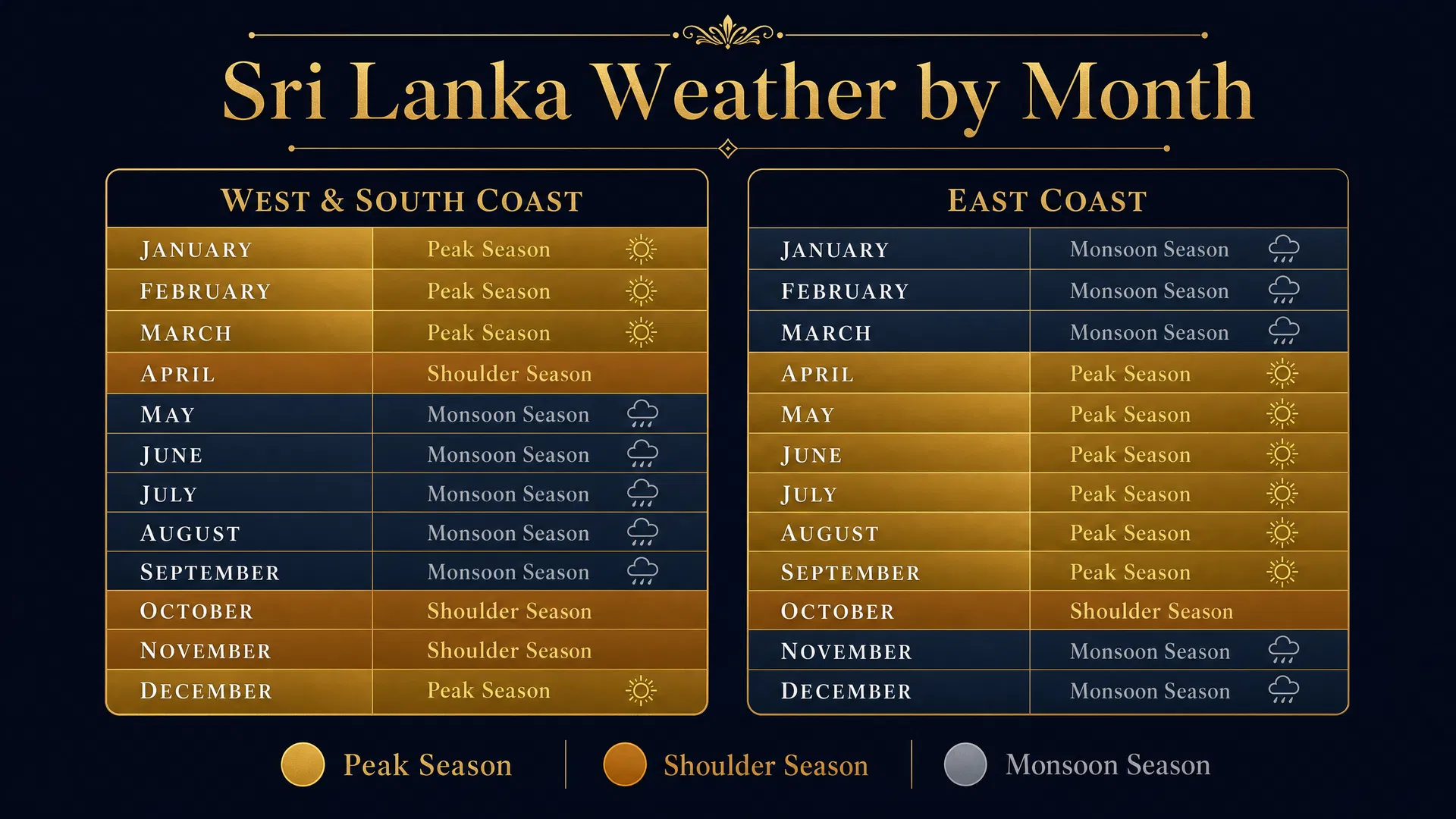
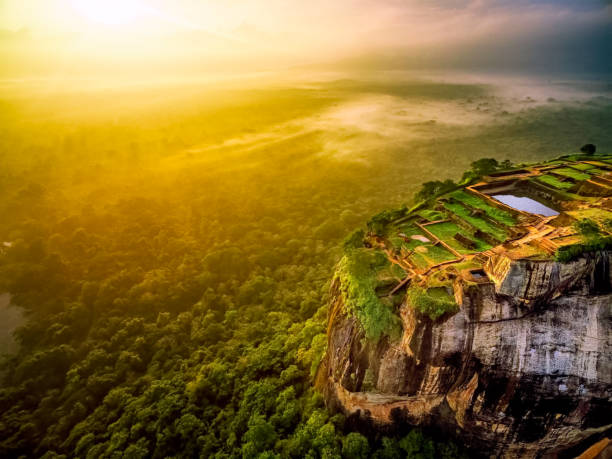
The period from December to March is the most popular time to visit Sri Lanka, and for good reason. The west and south coasts enjoy their driest, sunniest weather. Temperatures on the coast average 28–32°C, the sea is calm and ideal for swimming, and the Cultural Triangle — Sigiriya, Dambulla, Anuradhapura — is at its most accessible.
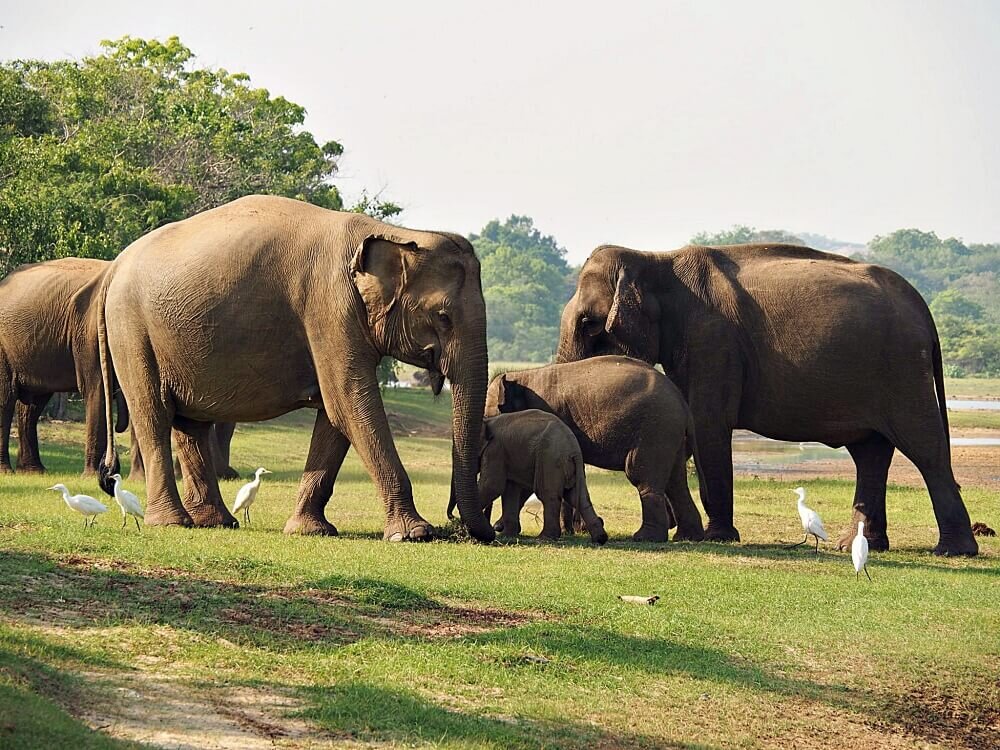
This is also the best time for wildlife safaris at Yala and Udawalawe National Parks, as lower vegetation makes animal sightings easier and the dry conditions keep the roads passable.
What to Expect During Peak Season
Expect higher hotel rates, busier roads, and more competition for popular accommodation. Booking well in advance — particularly for December and January — is strongly recommended. A private driver charter is especially valuable during peak season, as it removes the stress of navigating crowded public transport and gives you the flexibility to start early and avoid the midday heat.
Shoulder Season: April and October–November
April is a transitional month. The Yala monsoon has not yet arrived, so the west and south coasts still enjoy reasonable weather — though humidity begins to build. It is a good time to visit if you want to avoid peak-season crowds and prices while still enjoying the south coast beaches and the Cultural Triangle.
October and November are similarly transitional. October can be unpredictable island-wide, but by mid-November the west coast is drying out and the atmosphere is noticeably fresher. Shoulder season travellers often find the best combination of good weather, lower prices, and fewer crowds.
East Coast: Best from April to September
While the rest of Sri Lanka is managing the Yala monsoon, the east coast is at its absolute best. Trincomalee offers some of the finest beaches in Asia during June and July. Arugam Bay becomes a world-class surf destination from May onwards. Nilaveli and Passekudah are ideal for snorkelling and diving.
The east coast remains less developed than the south, which means fewer crowds, lower prices, and a more authentic experience. If you are travelling between May and September, building the east coast into your itinerary is highly recommended.
Hill Country: Year-Round, but Best in January–March
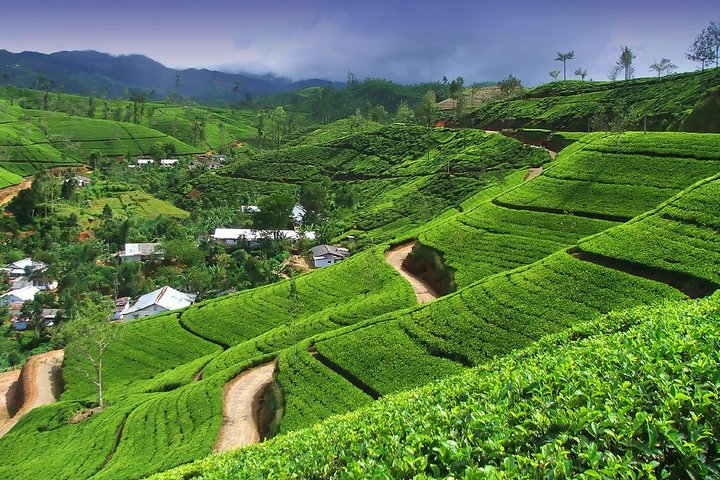
Ella, Nuwara Eliya, and the tea highlands sit at altitude and have their own microclimate. Temperatures are cooler year-round (15–22°C), and the landscape is lush regardless of the season. However, the hill country is most pleasant from January to March, when rainfall is at its lowest and the mountain views are at their clearest.
The famous Kandy to Ella train journey — one of the most scenic rail routes in the world — can be enjoyed at any time of year, but the views across the tea plantations are most dramatic in the dry season when the mist lifts by mid-morning.
Month-by-Month Summary
| Month | West & South Coast | East Coast | Hill Country | Cultural Triangle |
|---|---|---|---|---|
| Jan | Peak ★★★ | Monsoon | Best ★★★ | Best ★★★ |
| Feb | Peak ★★★ | Monsoon | Best ★★★ | Best ★★★ |
| Mar | Peak ★★★ | Improving | Best ★★★ | Best ★★★ |
| Apr | Shoulder ★★ | Good ★★ | Good ★★ | Good ★★ |
| May | Monsoon | Peak ★★★ | Monsoon | Dry Zone OK |
| Jun | Monsoon | Peak ★★★ | Monsoon | Dry Zone OK |
| Jul | Monsoon | Peak ★★★ | Monsoon | Dry Zone OK |
| Aug | Improving | Peak ★★★ | Monsoon | Dry Zone OK |
| Sep | Shoulder ★★ | Peak ★★★ | Improving | Good ★★ |
| Oct | Shoulder ★★ | Shoulder ★★ | Mixed ★★ | Mixed ★★ |
| Nov | Shoulder ★★ | Monsoon | Good ★★ | Good ★★ |
| Dec | Peak ★★★ | Monsoon | Good ★★ | Best ★★★ |
Why a Private Driver Makes Sense in Any Season
One of the most practical advantages of travelling Sri Lanka with a private driver is the ability to adapt your itinerary to the weather in real time. If a beach is experiencing unexpected rain, your driver can suggest an alternative inland destination. If a mountain road is clear and the light is perfect, you can stop for as long as you like.
Public transport in Sri Lanka — buses and trains — follows fixed routes and schedules. A private charter gives you the freedom to move between the west coast, the hill country, the Cultural Triangle, and the east coast in a sequence that makes geographic and meteorological sense for your travel dates.
SriNowa drivers are experienced in navigating all regions of the island in all seasons. Whether you are travelling in the height of peak season or exploring the east coast in July, your driver will know the roads, the conditions, and the best alternatives if plans need to change.